
Most evenings, once homework and the after-school activities are done, my three kids end up around the kitchen table with a pile of crayons. For a little while, it’s calm. I’ve been drawing coloring pages for years, first for my own kids and now for this site, and watching them use those pages day after day taught me something. Coloring is doing a lot more than filling time.
I’m Martin. I run coloring.photos and I draw the pages here myself. I’m also a dad of three, two girls who are ten and eight and a boy who’s four. So I get both sides of this. The design side, where I’m fussing over whether a line is too thin to print cleanly, and the parent side, where I find out fast whether a page can hold a tired kid on a wet afternoon. Here’s what I’ve learned about why it’s worth making time for.
It builds the hand muscles kids need to write
The thing that changed how I see it is what coloring does for a child’s hands. Pushing color onto paper is real work for the small muscles in the fingers and palm, and occupational therapists rely on it for exactly that reason. They use crayons in therapy to build hand strength and the kind of grip a kid needs later to control a pencil, which you can read about at The OT Toolbox. The control it takes to keep color roughly inside a shape carries over into handwriting down the line, according to Tools to Grow.
One small trick from that world that genuinely works at home: give a young child a short, stubby, broken crayon. A long fat crayon invites a whole-fist grab, while a little stub more or less pushes them into the thumb-and-fingers hold you want them to build.
I see it with my youngest. He’s four, and the chunky pages came well before any real writing. By the time letters started showing up, holding a crayon already felt completely normal to him.
It stretches their focus
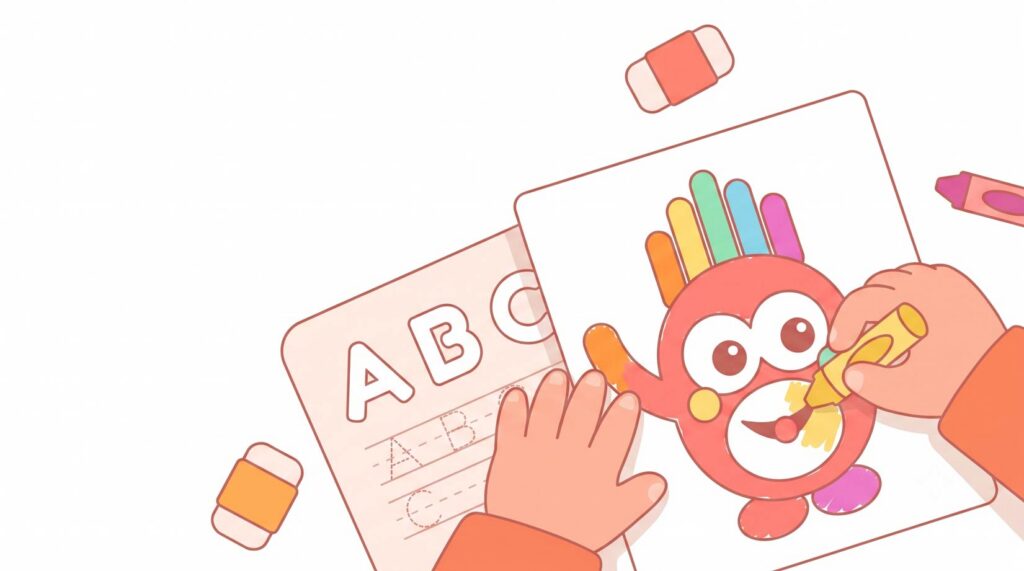
Coloring also stretches their focus, and that matters because we ask kids to concentrate all day long and rarely hand them a low-stakes way to practice it. A coloring page is one clear job with a finish line, and it pulls a child into a quiet sort of concentration that’s hard to get any other way.
There’s research behind that, not just hopeful parenting. In one study of children between six and ten, a coloring program improved their working memory and the mental skills they use to plan and stay on a task, including in kids who normally struggle to sit still (study).
The clearest example in our house was when the new Super Mario movie came out. My kids sat with the Mario pages far longer than I expected, completely absorbed in getting every color right.
A real calm-down tool
I’d keep calm and quiet separate, because they aren’t the same thing. Child therapists treat coloring as a mindfulness activity, a way for a kid to slow down and stay with the present moment, which helps them handle big feelings and come back down after they’ve been overwhelmed. There’s a good write-up of that at Whole Child Counseling. One study found it lowered anxiety in young people, and clinical psychologists have compared the feeling to a short meditation. It can also pull a wound-up, overstimulated kid back down after too much screen time, which Sage House Therapy gets into.
We mostly color in the evenings, once school and activities are done. It’s how everyone winds down before bed.
It rescues car journeys too. A few pages and a hard surface to lean on across their legs, and a long drive goes by a lot faster.
It grows creativity and confidence
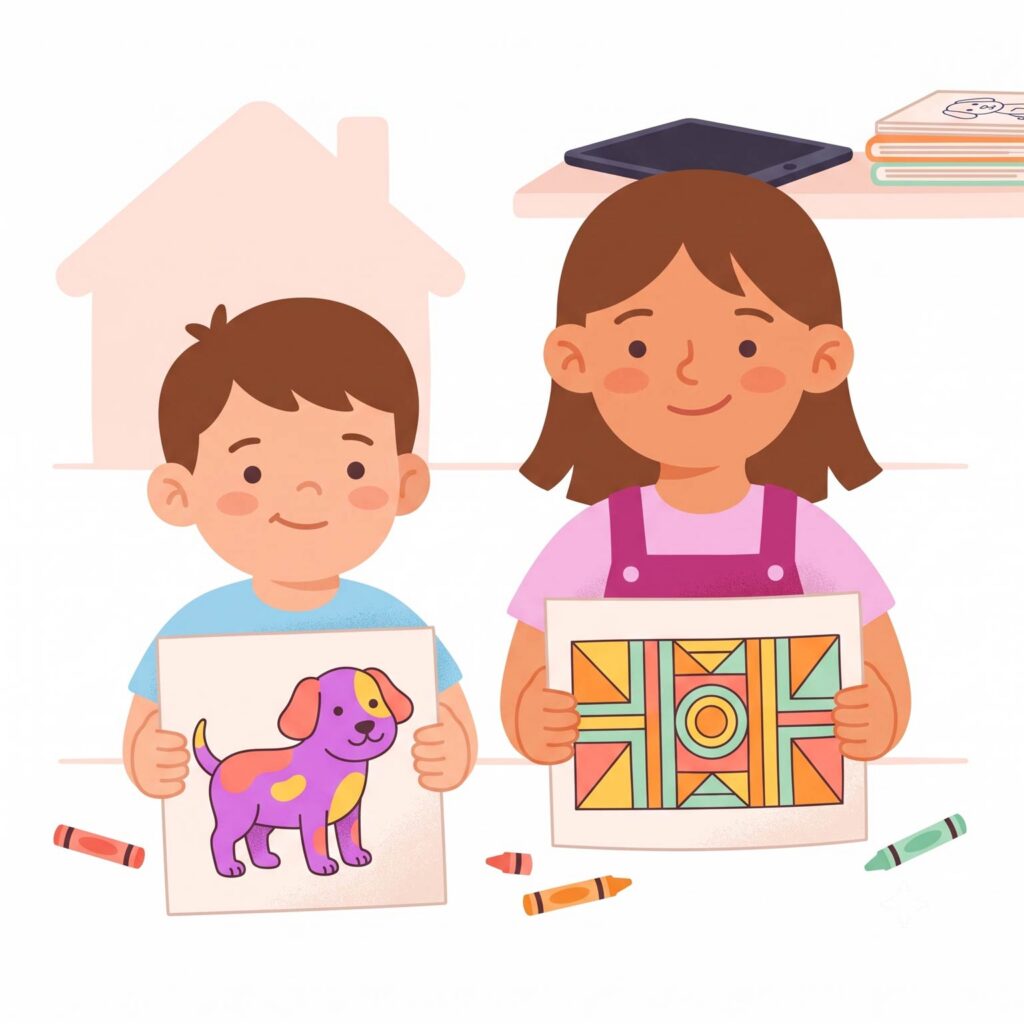
Every page is a run of small decisions. Which color goes where, and whether the dog is allowed to be bright purple. That freedom to choose is genuine creative practice, and it’s often where kids quietly show you what’s going on inside them, something Sage House Therapy touches on as well.
There’s a confidence piece I didn’t see coming. A coloring page has a clear end, so a child gets the small, complete satisfaction of finishing something they made themselves. One of my favorite examples was around the 2026 World Cup. My kids got really into coloring our country’s flag for it, and the pride on their faces when they finished was the whole point.
Screen-free time that resets them
Coloring is by far the best thing I’ve found for getting mine off a screen. I’ve got nothing against screens, I just like some balance. It works on their creativity and their motor skills at the same time, and because they gravitate toward pages from the movies and shows they already watch, it lets them connect with characters they love in a different way. They tend to come off a page calmer than they come off a tablet, too.
How to get the most out of coloring
A few small things make coloring count for more than filled time:
- Match the page to the child. Hand a four-year-old something packed with tiny detail and you’ll get frustration; hand an eight-year-old a page built for toddlers and you’ll get a shrug. That’s the whole reason every page here carries a difficulty level from one to five (the difficulty guide), so you can grab the right one without guessing.
- Color alongside them. Sitting down and coloring with your kid does more than any instruction you could give, and it’s oddly relaxing for you.
- Go easy on staying in the lines. That comes with time and muscle control, and leaning on it too early turns play into a test.
- Ask about their choices. “Tell me why the sky’s orange” turns a quiet activity into a real conversation and helps younger kids put words to what they’re feeling.
- Use decent tools. Chunky crayons for little hands, pencils for the older ones who want detail, printed on paper that can take it (how I print pages cleanly).
A quick note on age
Coloring grows up alongside the child. Toddlers start with big loose scribbles, and that’s exactly right; it’s how those fingers first learn to grip and aim. Preschoolers move toward filling shapes and sometimes the lines. School-age kids can take on real detail and the busier, more intricate pages. If you’re not sure where to begin, the difficulty levels take the guesswork out, and you can always drop down a level on a tired day.
If you’ve got a few minutes today, this is an easy one to try. Pick a page, sit down with them, and see what they do with it. You can browse the collections here, or start with the easy pages if you’ve got little ones at home.
Frequently asked questions
- 1Coloring with Crayons: Fine Motor and Visual Perception Benefits The OT Toolbox
- 2Coloring and Fine Motor Skills Tools to Grow
- 3The Effect of a Coloring Program on Working Memory and Executive Function in Children National Library of Medicine
- 4Using Coloring for Self-Regulation and Teaching Children About Feelings Whole Child Counseling
- 5How Coloring Supports a Child's Mental Health Sage House Therapy
Browse our full collection of free, print-ready pages, every one difficulty-rated.
I'm a dad of three and the person behind coloring.photos. I started this site after one too many rainy afternoons hunting for printable pages that were actually good, and actually free. I draw and difficulty-rate every page myself, and I write here about printing, parenting, and keeping little hands happily busy.


 Sofia the First
 Among Us
 Fortnite
 Minecraft
 Pokemon
 Roblox